
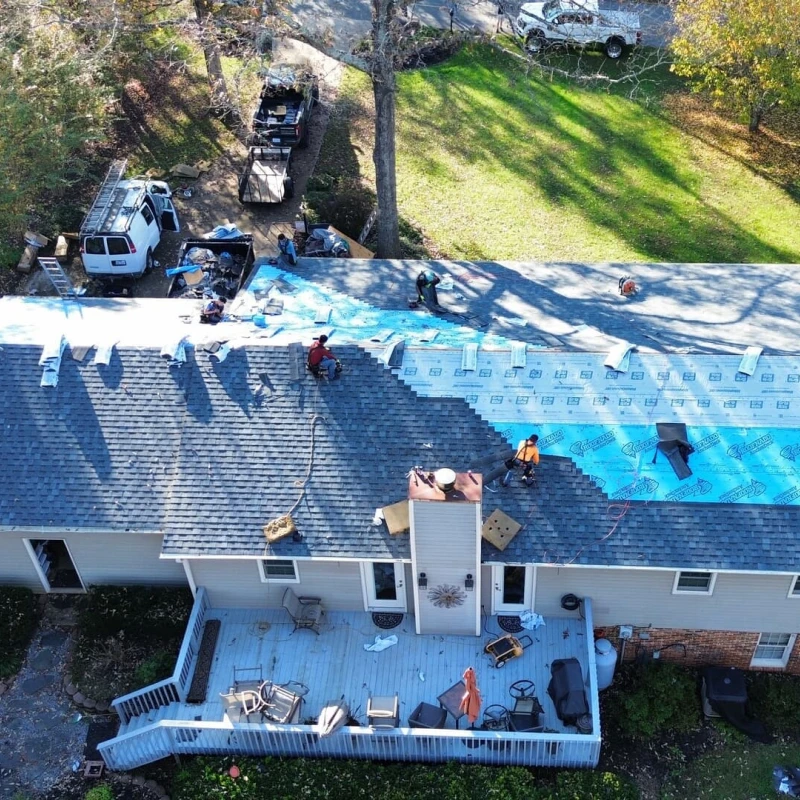
Visible Warning Signs from the Ground
Most homeowners never inspect their roof until water drips through the ceiling, but by that point, structural damage has often taken hold. The good news is that many storm-related issues reveal themselves from ground level if you know what to look for.
Start by walking the perimeter of your home on a clear day and examining your roofline from multiple angles. Look for shingles that appear darker than surrounding areas, which often indicates moisture absorption beneath the surface. Missing or curling shingle edges are red flags, especially after high winds. In Shelby and surrounding areas like Kings Mountain and Lincolnton, spring storms frequently produce wind gusts exceeding 40 mph, strong enough to lift shingle tabs that were already compromised by age or previous weather events.
Check for granule accumulation in your gutters and downspouts. Asphalt shingles shed granules naturally over time, but a sudden increase following a storm signals accelerated wear. These granules protect the underlying asphalt from UV damage, so their loss shortens your roof’s lifespan significantly. If you notice patches of shingle that look shinier or smoother than others, the protective granule layer may be gone.
Pay attention to flashing around chimneys, skylights, and vent pipes. Storm winds can loosen these metal barriers, creating entry points for water. Even small gaps allow moisture to seep into your attic and insulation, where it can cause mold growth and wood rot long before a visible leak appears inside your living space.
Dents on metal roof components, such as vents, gutters, or flashing, often indicate hail impact. While a dent on a vent cap might seem minor, it suggests your shingles absorbed similar impacts that may have fractured the asphalt mat beneath the granules. These micro-fractures compromise the shingle’s waterproofing integrity and typically worsen with temperature fluctuations common in North Carolina’s humid climate.
Critical Zones That Fail First
Not all sections of your roof face equal risk during a storm. Understanding which areas fail first helps you prioritize your inspection and catch problems before they escalate.
Roof valleys, where two planes meet, channel the highest volume of water runoff. This concentrated flow puts extra stress on shingles and underlayment, making valleys the most common starting point for leaks. After a storm, inspect valley areas for debris accumulation, torn shingles, or exposed underlayment. In the Charlotte metro area, where afternoon thunderstorms dump heavy rain in short bursts during summer months, valley failures account for a significant portion of emergency repair calls.
Ridge lines and hips endure the strongest wind forces. Wind doesn’t blow uniformly across your roof; it accelerates as it reaches peaks and edges, creating uplift pressure that can pry loose ridge caps and hip shingles. If you notice gaps along the ridge or shingles that appear lifted or misaligned, schedule a closer inspection promptly. These openings allow wind-driven rain to penetrate, even during moderate weather.
Eaves and rakes, the lower and side edges of your roof, are vulnerable to water infiltration when ice dams form or when wind drives rain upward beneath the shingle overhang. Check for water stains on the fascia board or soffit panels, which suggest moisture is bypassing your roof’s primary defenses. In areas like Gastonia and Concord, temperature swings between freezing nights and warmer days can create ice damming conditions that force water under shingles and into the roof deck.
Penetrations such as chimneys, plumbing vents, and skylights interrupt the continuous roof plane, requiring careful sealing and flashing. Storm damage often occurs where flashing meets roofing material, as differential expansion and wind stress can break sealant bonds. A roof inspection service will check these transitions closely, but you can spot obvious problems like rust stains, separated flashing, or cracked caulking from the ground or attic.
Reading the Patterns: What Local Weather Tells You
Different storms leave distinct damage signatures, and recognizing these patterns helps you assess risk even when individual signs seem minor.
Hail damage creates a speckled appearance on shingles, with random circular bruises or divots. The size and density of these marks correlate with hail diameter and storm intensity. In the Shelby region, late spring hailstorms are common, and even pea-sized hail can fracture shingle surfaces when driven by high winds. Hail damage isn’t always immediately obvious. What looks like minor cosmetic bruising on the surface may have cracked the fiberglass mat beneath, allowing water to wick into the shingle core and causing premature failure months later.
Wind damage typically presents as linear patterns aligned with the storm’s direction. You might see a strip of missing shingles across one section of the roof or shingle tabs lifted in a consistent pattern. Wind-driven debris, such as tree branches or torn fascia from a neighbor’s property, can puncture or scrape shingles, creating localized damage clusters. After severe storms move through areas like Mooresville and Hickory, it’s common to find shingle damage on the windward side of the roof while leeward sections remain untouched.
Water damage from prolonged rain or clogged drainage shows up as dark streaks, sagging sections, or widespread granule loss in low-lying areas. If your roof has poor drainage or if gutters were overwhelmed during the storm, standing water may have remained on the roof long enough to seep through small defects. This type of damage is insidious because it’s diffuse rather than concentrated, making it harder to pinpoint until rot or mold becomes extensive.
Understanding these patterns allows you to give a more accurate description when you contact a roofing company for an assessment, which speeds up the diagnostic process and helps ensure nothing gets overlooked during the inspection.
Signs Your Attic Is Hiding Damage
Your attic holds crucial evidence of roof compromise, often well before water reaches your ceiling. A careful interior inspection can reveal hidden storm damage that’s invisible from the outside.
Begin by examining the underside of your roof deck on a sunny day. Pinholes of light shining through indicate punctures or gaps in the roofing material. Even tiny openings allow moisture to enter, especially during wind-driven rain. Run your hand along the underside of the decking, feeling for dampness, soft spots, or temperature differences that suggest water intrusion.
Look for water stains on rafters, decking, and insulation. Fresh stains appear darker and may feel damp to the touch, while older stains are often outlined by a yellowish or brownish halo. Multiple stain layers in the same area indicate repeated leaks, a pattern common when minor storm damage goes unaddressed. In the humid climate of North Carolina, even small amounts of moisture can promote mold growth, which appears as black, green, or white patches and often produces a musty odor.
Inspect insulation for compressed, matted, or discolored sections. Wet insulation loses its loft and effectiveness, and it rarely dries completely once saturated, becoming a breeding ground for mold and pests. If you notice sagging or stained insulation, the roof above has likely been leaking for some time.
Check for daylight around roof penetrations such as vent pipes, chimneys, and exhaust fans. Gaps in these areas suggest failed flashing or sealant, both common after storm activity. If you see rust on metal components or mineral deposits on wood framing, water has been entering intermittently, perhaps only during certain wind and rain combinations.
Catching problems at this stage, before they result in interior ceiling damage, can save thousands in repair costs and prevent secondary issues like compromised structural framing or mold remediation.
When to Call for a Professional Assessment
Even a brief walk through your attic can uncover storm damage that would otherwise remain hidden for months. Daylight penetrating through the roof deck signals an immediate breach, while darker stains along rafters or sheathing point to moisture intrusion that may predate the most recent storm.
Check insulation carefully for compressed or discolored patches; these areas often lie directly beneath a roof leak. In Shelby’s humid climate, even minor moisture can promote mold growth within days, so any damp insulation warrants urgent attention. Run your hand along the underside of the roof sheathing if accessible, feeling for soft spots or swelling that indicate water absorption.
Examine nail tips that protrude through the decking. Rust on these fasteners confirms moisture exposure, and in many cases, the leak source sits within a few feet of the corroded nails. During spring and summer in the Carolinas, temperature swings between day and night can cause condensation in poorly ventilated attics, so distinguish storm-related water intrusion from chronic ventilation issues by noting the location and spread of stains.
